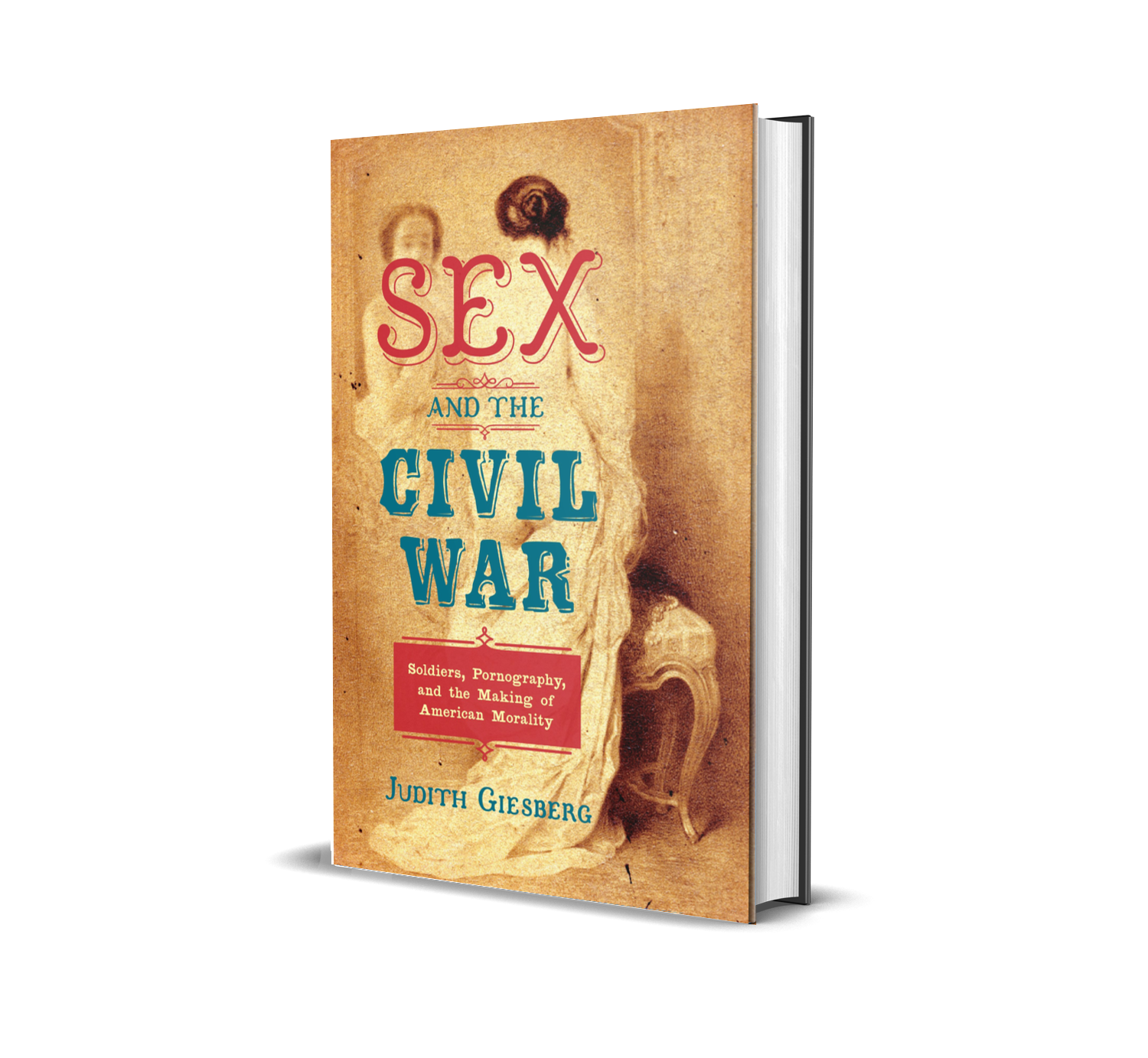
Sex and the Civil War
Pornography, and the Making of American Morality
Civil War soldiers enjoyed unprecedented access to obscene materials of all sorts, including mass-produced erotic fiction, cartes de visite, playing cards, and stereographs. A perfect storm of antebellum legal, technological, and commercial developments, coupled with the concentration of men fed into armies, created a demand for, and a deluge of, pornography in the military camps.
Illicit materials entered in haversacks, through the mail, or from sutlers; soldiers found pornography discarded on the ground, and civilians discovered it in abandoned camps. These materials raised sharp concerns among reformers and lawmakers, who launched campaigns to combat it.
By the war’s end, a victorious, resurgent American nation-state sought to assert its moral authority by redefining human relations of the most intimate sort, including the regulation of sex and reproduction—most evident in the Comstock laws, a federal law and a series of state measures outlawing pornography, contraception, and abortion.
University of North Carolina Press, 2017
Praise and reviews
“Judith Giesberg’s Sex and the Civil War is a much-needed examination of an understudied facet of one of America’s greatest conflicts. Provocative and informative, Giesberg challenges and changes the way we think of the Civil War and sexuality.”
– NINA SIBER
Author of Gender and the Sectional Conflict
“With this book, Judith Giesberg has written the first serious study of the erotica and pornography that nineteenth-century American soldiers read and shared and links them to the postwar reaction to pornography and to debates about the future of sex and marriage.”
– Source
All books by Judy