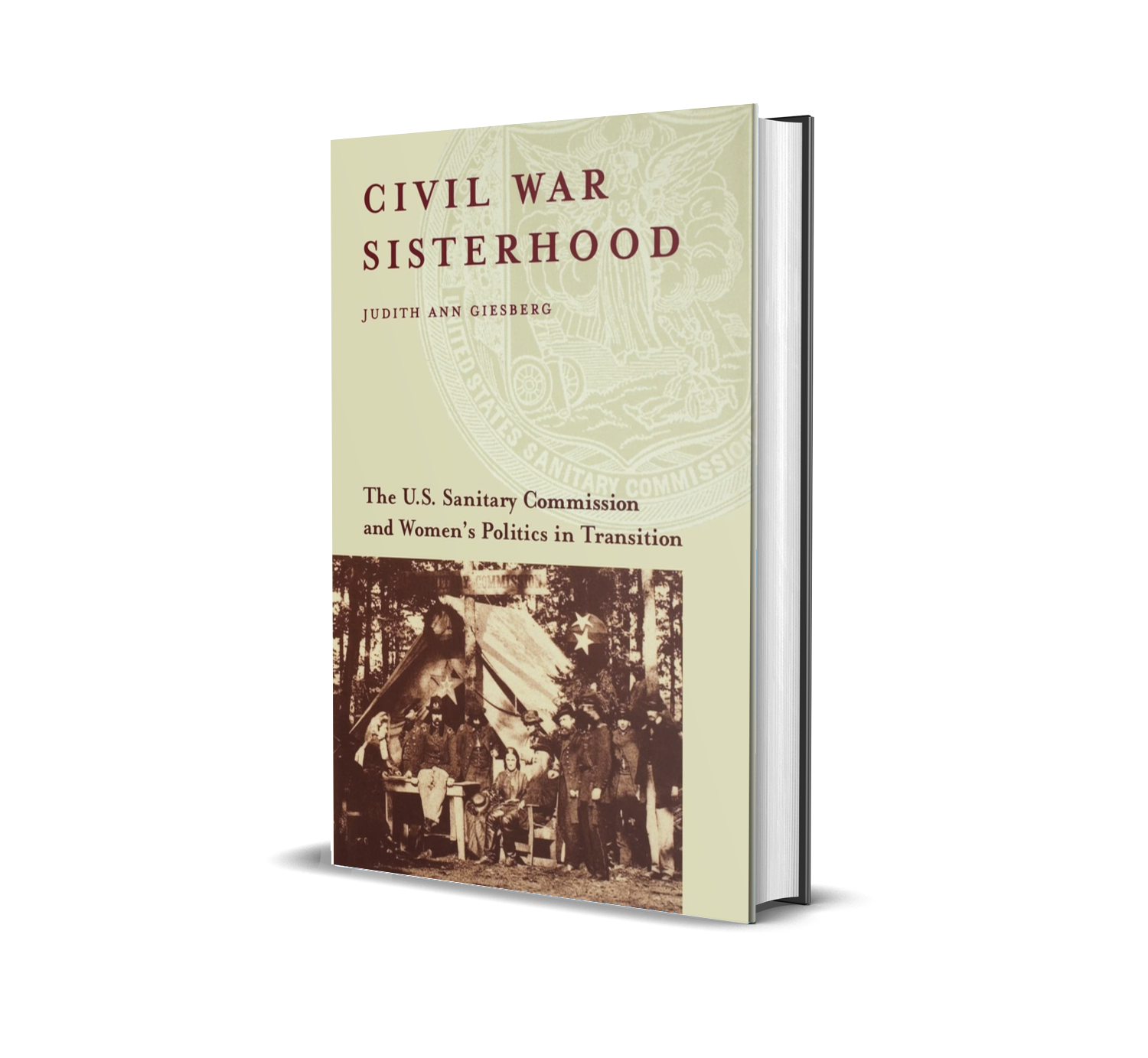
Civil War Sisterhood
The United States Sanitary Commission and Women's Politics in Transition
Civil War Sisterhood demonstrates convincingly that the generation of women who worked for the United States Sanitary Commission (USSC) during the Civil war, provided a crucial link between the local evangelical crusades of the early nineteenth century and the sweeping national reform and suffrage movements of the postwar period.
Drawing on USSC documents and memoirs, Giesberg explores the ways in which elite and middle-class white Northern women honed organizational and administrative skills, developed new strategies that combined strong centralized leadership with regional grassroots autonomy, and created a sisterhood that reached across class lines.
She shows how Louisa Lee Schuyler, Abigail Williams May, and other young women maneuvered and challenged the male-run Commission as they built an effective national network for giving critical support to soldiers on the battlefield and their families on the home front.
Northeastern University Press, 2000.
Praise and reviews
“It is hard to imagine that there is a more exciting field in either American women's history or Civil War-era studies. Judith Ann Giesberg's Civil War Sisterhood is a significant addition to this literature.”
– J. MATTHEW GALLMAN
Author of The Cacophony of Politics: Northern Democrats and the American Civil War
“Judith Ann Giesberg's book is a welcome addition to the growing literature on women's participation in the Civil War. Giesberg argues that the generation of women who ran and staffed the major commission branches between 1861-1865 challenged antebellum separate spheres ideology and, in doing so, created an expanded role for women in the political culture with important consequences for Gilded Age and Progressive reform movements.”
– JOAN WAUGH
Author of U. S. Grant: American Hero, American Myth
All books by Judy